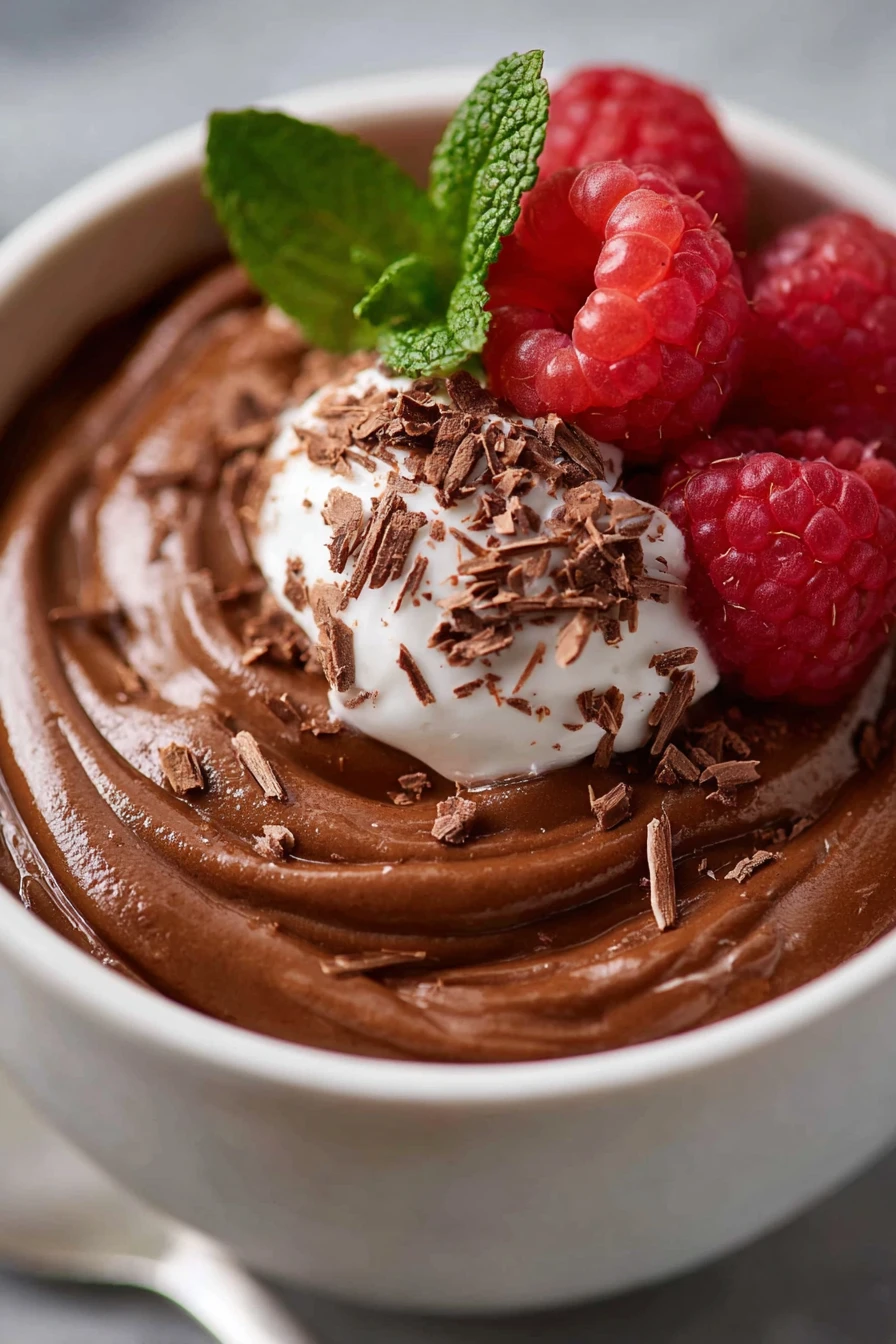
The Quest for the Ultimate Creamy Chocolate Mousse
Few desserts evoke such universal delight as chocolate mousse. It’s a symphony of textures and flavors – light as air, yet intensely rich, a velvety indulgence that promises a decadent finish to any meal. Whether presented simply in a rustic bowl or elegantly piped into a delicate glass, it consistently delivers an experience of pure, unadulterated pleasure. From a romantic Valentine’s Day treat paired with a dessert wine to a sophisticated dessert following a hearty meal, chocolate mousse is a timeless classic that always hits the mark.
What makes chocolate mousse so appealing, beyond its inherent deliciousness, is its practical advantage for entertainers: it can often be made and plated ahead of time, freeing you up to enjoy your guests. However, the path to achieving that perfect, ethereal texture and deep chocolate flavor can sometimes seem daunting. Many home cooks shy away from making mousse, intimidated by techniques often associated with intermediate or advanced pastry skills. With countless chef recipes available, all using similar core ingredients like chocolate, eggs, and heavy cream, but varying wildly in their procedures and perceived difficulty, we embarked on a mission: to test and rank top chef recipes to find the one that truly delivered the creamiest, dreamiest results.
Deconstructing Perfection: The Art and Science of Classic Chocolate Mousse
To truly appreciate the nuances of a great chocolate mousse, it's helpful to understand its classical foundations. Historically, a proper mousse is a delicate balance of flavor, aeration, and stability. Culinary texts, such as The Fundamental Techniques of Classic Pastry Arts from the French Culinary Institute, reveal that chocolate mousse can originate from several base components. These include a rich ganache, a silky crème anglaise, or even a pâte à bombe—a luxurious emulsion created by whisking hot sugar syrup into egg yolks.
Each of these bases provides a foundation of flavor and richness, to which melted chocolate is then incorporated. The characteristic lightness and airiness of mousse typically come from folding in a meringue, often an Italian meringue (made with hot sugar syrup), which provides structure. Finally, whipped cream is gently folded in to impart the signature creaminess and further lighten the mixture. For added stability, especially when using lighter or more fluid chocolates like white chocolate, gelatin might be introduced. However, combining three challenging techniques—like making a ganache, a pâte à bombe, and an Italian meringue—into one recipe can understandably deter even enthusiastic home bakers. This complexity often leads to a search for "easy" chocolate mousse recipes, but the real question is: what texture and flavor compromises are made in the name of simplicity?
Understanding these traditional methods is key to appreciating why some recipes truly stand out. If you're keen to dive deeper into the various techniques, both classic and simplified, our article Chocolate Mousse Unpacked: Exploring Classic & Easy Techniques offers an insightful exploration.
The Great Chef Showdown: Our Search for Sublime Texture and Flavor
Driven by curiosity and a desire to demystify the art of chocolate mousse for our readers, our team, alongside talented culinary experts and testers, undertook a rigorous taste test. We meticulously selected and retested several chocolate mousse recipes from the published archives of well-known chefs. Each recipe was prepared with precision, and then blind-tasted by a panel of discerning food editors and test kitchen professionals. It was a fascinating exercise, revealing just how versatile this classic dessert can be, reinterpreted to cater to different palates and skill levels.
Our criteria went beyond mere taste; we were on a singular quest for the creamiest, dreamiest texture possible. We evaluated the chocolate intensity, the balance of sweetness, the melting quality on the tongue, and, most importantly, that elusive, cloud-like consistency that defines a truly exceptional chocolate mousse. The variations in technique, despite similar ingredients, produced surprisingly different results, from denser, more ganache-like textures to lighter, almost frothy preparations. But in the end, one recipe unequivocally distinguished itself.
Crowning the King: Dominique Ansel’s Extra-Creamy Chocolate Mousse
After much deliberation, one recipe emerged as the undisputed champion, delivering on the promise of unparalleled creaminess and profound chocolate flavor: Chef Dominique Ansel’s Extra-Creamy Chocolate Mousse. Chef Ansel, renowned for his innovative pastries and for honing his craft through rigorous French apprenticeships, brings a mastery of technique that translates into an extraordinary dessert.
What set Ansel's recipe apart was not just its rich chocolate taste, but its utterly sublime texture. It was a perfect equilibrium of lightness and density, a mousse that felt substantial yet melted away effortlessly on the palate. The "extra-creamy" description wasn't just marketing; it was a genuine characteristic that distinguished it from the competition. This recipe showcased how a deep understanding of ingredients and technique can elevate a classic to new heights, resulting in a finish that was both intensely satisfying and elegantly smooth. It wasn't overly sweet, allowing the quality of the chocolate to shine through, leaving a lingering, luxurious finish that made it the unanimous favorite among our testing panel.
Crafting Your Own Dreamy Mousse: Expert Tips and Accessible Paths
While Dominique Ansel's recipe stood out, the journey taught us valuable lessons applicable to any chocolate mousse endeavor. Here are some expert tips to help you achieve your own dreamy, creamy results:
- Quality Chocolate is Key: Invest in high-quality chocolate (60-70% cacao for a balanced dark chocolate flavor) as it forms the backbone of your mousse. Avoid chocolate chips designed for baking as they contain stabilizers that can affect the melt and texture.
- Temperature Control: Pay close attention to ingredient temperatures. Melted chocolate should be slightly warm, not hot, when incorporating other elements. Egg mixtures often require gentle heating over a double boiler (bain-marie) to a specific temperature for safety and emulsification, followed by cooling.
- Gentle Folding is Paramount: This is perhaps the most critical step. Whether folding in meringue or whipped cream, use a light hand. Over-mixing will deflate the air you've carefully incorporated, leading to a denser, less airy mousse. Fold just until no streaks remain.
- Whip Cream to Medium Peaks: For the whipped cream component, aim for medium peaks – firm enough to hold its shape, but still soft and billowy. Over-whipping can lead to a grainy texture.
- Chill Time is Essential: Allow adequate time for your mousse to chill and set. This firms up the texture and allows the flavors to meld beautifully.
Even if mastering classic French pastry techniques seems a bridge too far, don't despair! The pursuit of an exquisite chocolate mousse doesn't always demand advanced skills. Many simplified methods can yield incredibly delicious results without the complexity of multiple bases or meringues. These often streamline the process by focusing on the careful combination of melted chocolate, whipped eggs, and whipped cream, often leveraging the stability of the egg yolks and chocolate itself. For those seeking an entry point into this delightful dessert, we highly recommend exploring our Chocolate Mousse for Beginners: Easy Recipe, Perfect Texture, which proves that simplicity doesn't have to mean sacrificing that coveted creamy perfection.
Serving suggestions can elevate the experience further. A dollop of lightly sweetened whipped cream is a classic accompaniment. For an unexpected twist, consider a drizzle of high-quality extra virgin olive oil and a sprinkle of flaky sea salt – it wonderfully enhances the chocolate's depth. Pairing it with a strong espresso, a dessert wine, or a bitter amaro can also create a truly memorable finish to your meal.
In conclusion, while the world of chocolate mousse offers a spectrum of techniques and textures, our quest for the creamiest and dreamiest led us to the refined brilliance of Chef Dominique Ansel. His recipe stands as a testament to the magic that happens when classic French technique meets a passion for perfection. Yet, the beauty of this beloved dessert lies in its accessibility across skill levels. Whether you embark on a complex culinary adventure or opt for a wonderfully simplified approach, the ultimate reward remains the same: a spoonful of intensely rich, utterly smooth, and undeniably creamy chocolate mousse, a true indulgence that promises to delight every single time.
